Our own field workers
















10 July 2026
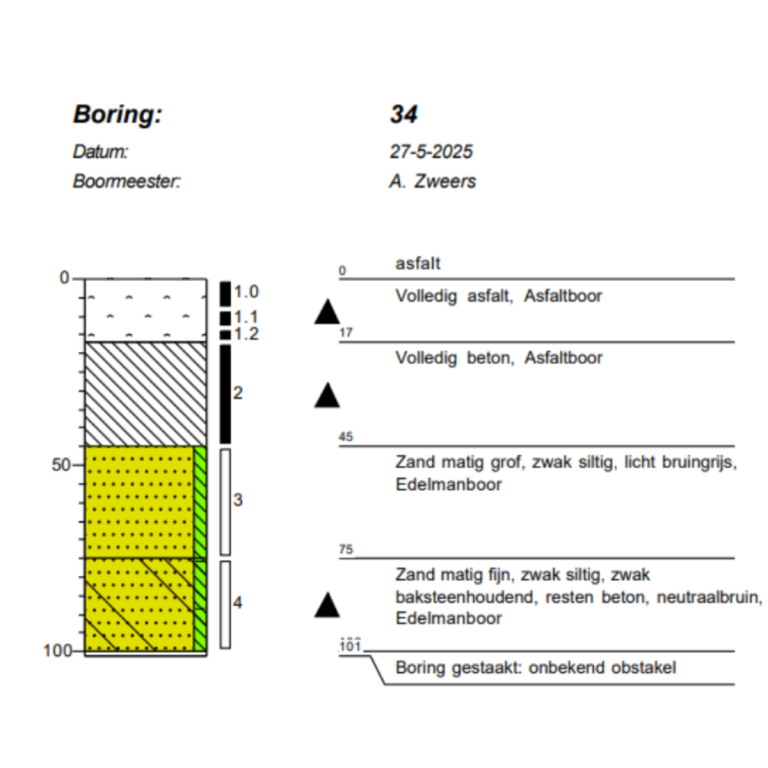
An infrastructure survey provides a single view of the quality of asphalt, foundations, and underlying soil for roads, dykes, and other linear elements. In the design phase, you already know what to expect.
Infrastructure
An infrastructure survey provides a single view of the quality of asphalt, foundations, and underlying soil for roads, dykes, and other linear elements. Municipalities use this method especially when they want to reconstruct or re-asphalt a road.
Our approach
All layers of the road in one study.
We are investigating the asphalt layer for tar content. The likelihood of this being present in asphalt from before 1995 is greatest. In the case of asphalt from after 1995, the level of research is lower. Tar-containing asphalt must not be simply recycled and has different processing requirements.
Under the asphalt there is often a layer of rubble or gravel as a foundation. We determine whether that can be reused for the new road or must be removed and replaced.
We look at the environmental hygienic quality of the soil beneath the foundation and at the civil engineering suitability for reuse as a supplement.
Nowadays, municipalities often want to decouple rainwater from the sewer network. In the same study, we then measure the permeability for a wadi or infiltration sewer design.
The advantage
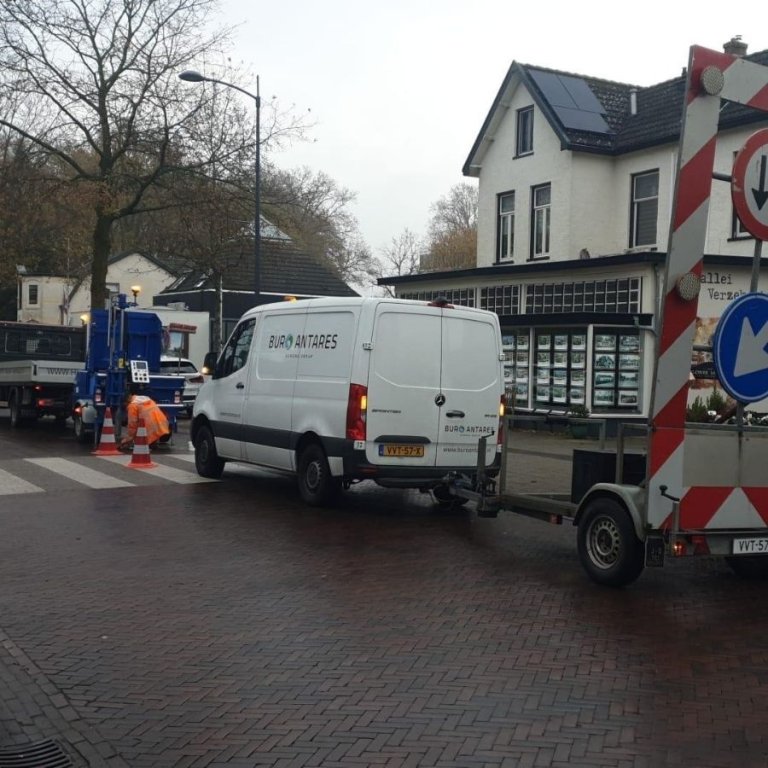
Blocking a street costs money and causes inconvenience.
By combining all the surveys into one field round, you only have to take one traffic measure — and then you have all the information for the planning phase at hand.
For whom?
FAQ
Do you have a question? View the most frequently asked questions or contact us directly.
Get in touchThat depends on the length of the road and the level of detail desired. We work according to the applicable guidelines and agree in advance on the appropriate level of research coverage.
For asphalt from before 1995, tar content testing is almost always worthwhile. For newer asphalt, the level of testing is lower and in some cases no testing is necessary. We determine this in advance based on the date of construction and the available data.
Ideally, during the planning phase, before the work goes on the market. Then you can include the results in the tender documents.
Our partners
Within Aurora Group, we work alongside specialists who enhance our quality and cover the entire process, from research to execution and aftercare.
News