Direct lines of communication, quick turnaround
10 July 2026
The transportation of soil containing invasive exotic plants (known as invasive species such as giant knotweed and giant reed) is legally prohibited, except in specific cases of eradication, control or management. The reason for this is that living plant roots or stems can develop from the soil into new plants, which leads to further spread. The giant reed, for example, grows mainly along waterways, roads and railway lines. The plant develops vegetatively for several years before flowering – usually between late June and August. One flower pan can produce more than 20,000 seeds. These usually fall within 25 meters of the mother plant in the top layer of the soil and remain viable for up to seven years. Propagation, unlike that of the giant knotweed, occurs via wind, water and – not insignificant and similar to that of the giant knotweed – human activities such as mowing, land clearing and transport. This last form of propagation is increasingly under discussion.
In the case of earthworks, it is important to identify risks beforehand and make arrangements to ensure the responsible disposal of soil contaminated with knotweed or other exotic plants to a specialized processor. Proper pre-disposal inspection with attention to these exotic plants is very relevant in this context! A key tool for this is the protocol developed by the soil industry associations VVMA/VKB.
The VKB/VVMA protocol is a research method for detecting Asian centipedes underground, especially when they are no longer immediately recognizable during a growing season. This protocol is used as part of a larger National protocol for dealing with Asian centipedes, which provides guidelines for control and prevention of spread. The VKB/VVMA protocol specifies that soil with these root residues must be treated with care and under strict conditions to prevent further spread.
Land with perennial weeds must be disposed of to a certified processor, such as a specialized green waste company or sometimes at the environmental department (check with your municipality).
Before the soil is removed, the above-ground parts and the larger root pieces can be removed and disposed of as green waste.
When digging is done, the sifted soil can sometimes be reused, provided that the areas are carefully checked for new plant growth.
Post-care is essential to check that all root parts have been removed and to remove any new shoots that may have grown.
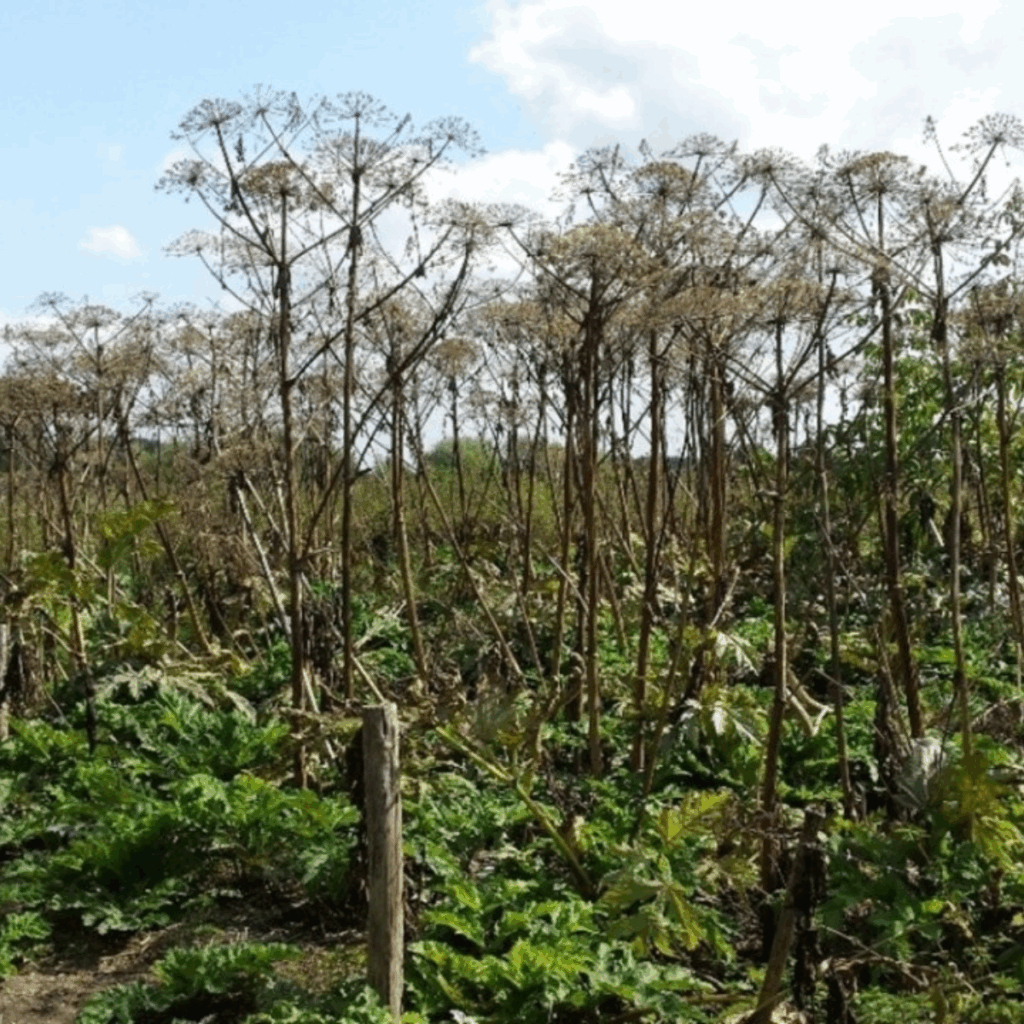
In the winter, a regular in-situ patch survey (AP04) was conducted at a location. At that time, there were no visible indications of the presence of Giant reed canary grass. However, a few months later, the area in question was full of mature plants.
It is clear that soil containing seeds of Giant reed grass can lead to spread and regrowth at a new location during transport. This raises the question: is soil transport still allowed in such cases?
The Dutch Food and Consumer Product Safety Authority (NVWA), responsible for monitoring compliance with the EU regulation, has been consulted on this matter.
According to Article 7 of the European regulation, the marketing of an invasive species is prohibited if there is evidence of Design. In other words: only if someone knowingly sells soil with seeds of Giant Beargrass is there a violation. The burden of proof for this lies with the NVWA.
An example of intentionality could be: excavating soil at a location where visibly flowering plants are present. However, in order to be able to take enforcement action, this must be traceable and demonstrable – which is difficult in practice.
The NVWA emphasizes that enforcement is difficult and therefore focuses primarily on information and awareness-raising In the sector. Just as with Asian thousand-knots, attention is also growing here for preventive measures.
The case study demonstrates the importance of early detection and careful handling of soil. Especially in projects involving excavation or earthworks, it is crucial to be alert to the possible presence of invasive species. This can prevent further spread, but also allow civil proceedings to be initiated if the soil turns out to be contaminated.
There are various options available for professionals who come into contact with invasive alien species. knowledge cards, training and digital learning resources Available. These support the recognition of species and the application of the appropriate measures.
These learning materials were also developed with support from the Knowledge and Innovation Agenda for Agriculture, Water and Food.
In case of need, ask one of our specialists for information about invasive exotic species at our offices in Dordrecht and Zutphen.
Please note: the basis of this article has been carefully compiled by the Knowledge Network Invasive Alien Species in collaboration with the NVWA and provides general information. No rights can be derived from its content. For legal interpretation of regulations, it is recommended to contact the competent authorities.